How Basketball Club Teams in San Diego Turn Potential into Performance
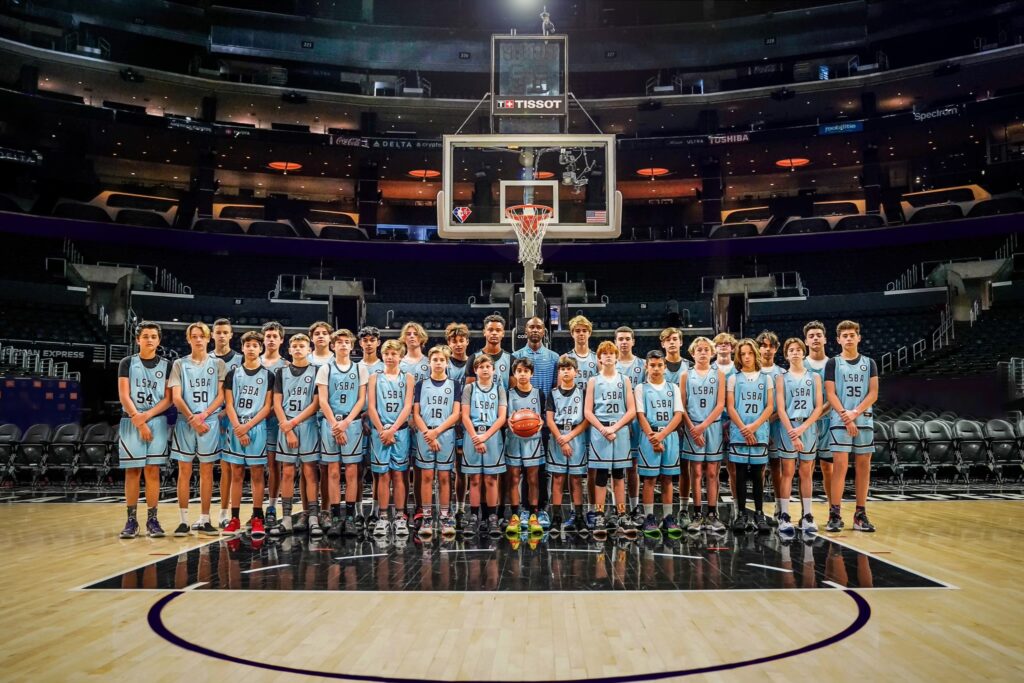
Talent shows up early in basketball. Performance usually does not.
A sixth grader can be taller than everyone in the gym, fast enough to outrun traps, and skilled enough to score 20 points without understanding spacing, timing, or defensive responsibility. A high school freshman can look polished in open runs and still struggle the moment the Basketball Club Teams San Diego game becomes physical, organized, and loud. That gap, between visible promise and reliable production, is where club basketball matters.
In San Diego, that gap is especially interesting. The region has strong athletes, year-round training weather, and a deep mix of school programs, private trainers, travel circuits, and local leagues. It also has a basketball culture that can be deceptively complex. Families often assume that more tournaments, more exposure, and more social media clips automatically lead to improvement. Coaches who have spent years in gyms around the county know better. Development is rarely built on volume alone. It is built on structure, repetition, correction, and trust.
That is why the best Basketball Club Teams San Diego families seek out are not simply collecting wins on weekends. They are building players from the inside out. They take athletic tools and shape them into habits that travel, whether the player is in a local league game in Chula Vista, a showcase event in Orange County, or a pressure possession late in a playoff game for a high school team.
Potential is easy to spot, performance is harder to build
Potential is attractive because it looks obvious. A player has length. A player has touch. A player moves well. A player competes hard. Those traits matter, and good coaches absolutely value them. But raw gifts can hide incomplete development.
One of the most common mistakes in youth basketball is confusing flashes for readiness. A player might make three difficult pull-up jumpers and spend the rest of the game missing rotation assignments, failing to communicate, and losing track of weak-side help. Another player might score only eight points but control pace, make the extra pass, contain dribble penetration, and finish the game with a positive impact in every meaningful area. Club coaches who know what winning basketball looks like can tell the difference immediately.
That distinction matters even more in a city like San Diego, where players often move between multiple basketball environments. They may play for school teams, club teams, and outside skills trainers at the same time. They are exposed to different voices, different systems, and different expectations. If nobody is connecting those experiences, a player can improve in isolated pieces without ever becoming a complete competitor.
The best club programs serve as that connector. They teach players how individual skill fits into team basketball. They help athletes understand when to use what they have worked on. A crossover is not valuable because it looks smooth in a training session. It is valuable when it creates an angle, forces help, and leads to a good shot. Vertical explosiveness matters, but so does knowing when not to leave your feet. Shooting range matters, but shot selection matters just as much.
Performance begins when those choices become consistent.
San Diego gives players opportunity, but also distractions
San Diego is a good place to raise a basketball player. The weather allows year-round access to outdoor courts and constant movement. The county stretches across a broad range of communities, each with its own style of play and level of competition. There are suburban programs, urban school teams, military-family athletes used to adapting quickly, and players crossing between sports because the local talent pool is athletic and competitive.
That depth creates opportunity. It also creates noise.
A player may have access to several club options within driving distance. Families can feel pressure to chase the loudest brand, the biggest social media presence, or the schedule with the most travel. Sometimes that works. Often it does not. More tournaments can mean more games, but not necessarily more teaching. Playing up a level can challenge a player, but it can also reduce them to standing in the corner if the fit is wrong. Exposure events have value, but exposure without preparation tends to expose weaknesses first.
Experienced coaches in San Diego usually ask quieter questions. Is the player getting meaningful repetitions in practice? Are they learning how to defend in space? Are they being held accountable for effort away from the ball? Does the team environment encourage poise, or just highlight chasing? Does the coach have a clear development plan by age and stage?
Those questions do not make for flashy marketing. They do, however, produce better basketball.
The real work happens on ordinary weeknights
Parents often evaluate club teams by what they see on weekends. Tournaments are visible. Results are posted. Highlights are shared. Sideline conversations usually begin with points scored and games won.
Most long-term improvement happens somewhere less glamorous, usually on a Tuesday evening in a school gym with squeaky floors, bad acoustics, and a coach stopping the same action four times in a row until everyone gets it right.
That is where potential starts becoming usable.
A well-run practice teaches players how to process. They learn to hear a correction, apply it immediately, and repeat it under pressure. They learn what game speed actually feels like. They discover that good footwork is tiring, that closeouts are technical, and that defensive stance is not a pose but a demand on the body. They realize that making the simple pass on time is harder than making the flashy pass late.
In strong club environments, coaches do not just run drills to fill time. They build sequences. A finishing drill may lead into a decision-making segment, then into small-sided games that force spacing reads, then into live transition work where players must sprint back, communicate, and locate matchups. Each piece should connect. Players should understand why they are doing it.
That matters because many young athletes plateau not from lack of effort, but from disconnected training. They spend one hour on ball handling, another on shooting, then enter games with no idea how to merge those skills into actual possessions. Club teams can bridge that gap if their coaches value teaching as much as competition.
Good club coaching is part instructor, part evaluator, part architect
The phrase "good coach" gets used loosely. In practice, coaching club basketball at a high level requires several different jobs at once.
An instructor teaches technique. That includes footwork on drives, defensive angles, passing windows, finishing through contact, and timing on cuts and screens. A player may have heard "stay low" for years without ever learning what low actually allows them to do. The best coaches explain movement in practical terms. Bend here so you can change direction. Open your hips there so you can contain baseline. Land balanced so your shot does not drift left.
An evaluator watches what holds up in games. Plenty of players look sharp during controlled reps. Fewer can make the same reads with defenders flying around them. Experienced club coaches keep score differently than spectators do. They track communication, transition habits, box-outs, advantage creation, and emotional response after mistakes. A player who slumps after a turnover is giving away more possessions than the box score shows.
An architect builds a system that gives players both responsibility and clarity. Young athletes need enough structure to know where to be, but enough freedom to learn. If everything is scripted, they stop thinking. If nothing is organized, they do not improve. The balance is delicate. It changes by age group, talent level, and roster makeup.
The most effective Basketball Club Teams San Diego offers usually have coaches who understand that development is not linear. One player may need six months to trust a jump shot in games. Another may score easily but take a year to become dependable on defense. A coach's patience, standards, and honesty often determine whether a player pushes through that stage or stalls there.
Skill training only matters when it transfers
There is no shortage of basketball training available in Southern California. Some of it is excellent. Some of it is cosmetic. The difference usually comes down to transfer.
Transfer means that a skill learned in training appears in real games, under real pressure, against real resistance. That sounds simple. It rarely is.
Consider shooting. A player may hit hundreds of stationary threes in a workout. Then a game asks for a relocation three after a drive-and-kick, with tired legs, a hard closeout, and two seconds to decide whether to shoot or swing it. The mechanics are only part of the task. Footwork, balance, confidence, and speed of recognition all matter. Club teams create the context where those variables meet.
The same is true for ball handling. Fancy combinations mean little if the player cannot protect the ball with their body, see the second defender, and deliver a pass on time. Big men may spend hours on post moves they barely use, when what they really need is screening angle work, short-roll decisions, and defensive mobility. Guards often want deeper range when they still struggle to finish through length.
A smart club coach helps players and families sort useful training from impressive-looking training. Sometimes that means telling a talented scorer to spend less time on difficult step-backs and more time on catch-and-shoot reps and weak-hand finishes. Sometimes it means asking a young post player to stop chasing guard skills for a while and master rebounding position, rim protection timing, and outlet passing first.
That kind of advice can be unpopular because it sounds limiting. In reality, it is often what unlocks the next level.
The hidden separator is decision-making
At younger ages, athleticism can cover mistakes. By the time players face better competition, decisions start deciding games.
A good club team builds basketball IQ on purpose. Coaches do this through film, guided breakdowns, and repetition in game-like situations. They teach players how to identify tags on rolls, when to drift versus cut, how to read a hedge, and why early help matters. These are not advanced details reserved for elite prospects. They are practical tools that make every player more effective.
One of the clearest signs of development is when a player begins anticipating rather than reacting. A wing sees the help defender leaning and cuts before the lane closes. A point guard recognizes the weak-side low man stepping up and throws the skip pass without holding the ball. A forward feels the mismatch and seals early instead of waiting for a post touch that never comes.
This is where coaching language matters. Vague instruction produces vague play. Specific feedback changes habits. "Be aggressive" means little. "Catch, chin it, attack the high foot in two dribbles" gives the player an action. "Play harder" is empty. "Sprint back to the paint first, then fan out to your man" is usable.
Over time, usable instruction becomes instinct.
Competition level should stretch a player, not bury them
Families often ask whether their child should "play up" an age group or join the most nationally ambitious roster available. Sometimes the answer is yes. Just as often, it is no.
Development depends on productive struggle. If competition is too easy, bad habits survive. If it is too hard, confidence can collapse and learning narrows. A player who never handles the ball in meaningful moments is not getting real growth from sitting in a stacked backcourt, even if the jersey is prestigious. On the other hand, a player dominating weak local competition may stop expanding their game entirely.
Finding the right level is less about ego and more about role. Can the player make mistakes and still stay on the floor long enough to learn from them? Are they being challenged to defend stronger players, process quicker actions, and execute under pressure? Is the team asking them to do things that matter for long-term progress?
There is no perfect formula, but there are warning signs. If a player is always the best athlete in the gym and never asked to think, the environment may be too soft. If they look tense every possession, never touch the ball, and leave tournaments discouraged, the fit may be too aggressive. Strong club programs revisit this balance often instead of setting a roster and pretending every player is on the same timeline.
Parents shape the process more than they realize
No honest conversation about youth club basketball can ignore the parent role. Supportive families can accelerate growth. Anxious, reactive behavior can interfere with it.
The healthiest parent approach is steady. Show up. Be encouraging. Let the coach coach. Ask thoughtful questions at the right time, not in the parking lot after a rough game when everyone is emotional. Players need room to fail, recover, and own parts of their development. If every game turns into a debrief about minutes, shots, and perceived slights, the athlete local basketball clubs in San Diego starts performing under a second layer of pressure.
San Diego families face a particular challenge because the club ecosystem is busy and visible. It is easy to compare. One player appears to be traveling more. Another posts highlight videos every weekend. A different team has bigger event names on the schedule. Comparison can push parents into constant movement, and constant movement is often the enemy of real development.
A player needs time in a system. They need a coach who has seen them in different settings, after good games and bad ones, healthy stretches and slumps. Progress is easier to detect over months than over one weekend.
Parents usually serve their athlete best when they focus on a few steady markers:
- Is my child improving in habits that coaches value?
- Is the environment challenging but supportive?
- Is feedback honest and specific?
- Is my child learning resilience, not just basketball moves?
- Is the joy of playing still there?
Those answers say more than medals and social media ever will.
Team culture can raise a player's ceiling
People like to talk about individual development as though it happens in isolation. It rarely does. The environment around the player shapes the speed and quality of growth.
A serious club culture teaches accountability in ways private workouts cannot. Teammates notice who cuts corners in drills, who talks on defense, who sprints the floor, who sulks after getting subbed out, and who stays engaged from the bench. Those standards spread. So do bad habits.
The best club teams create a gym atmosphere where effort is normal, correction is expected, and toughness is measured in response rather than volume. Loud teams are not always tough teams. Real toughness looks like executing after a mistake, getting back on defense after a missed shot, and accepting a hard coaching point without shutting down.
This matters in San Diego because many players are balancing school demands, travel, and multiple commitments. They need an environment that respects their lives but does not lower standards. The strongest programs find that line. They ask for discipline, punctuality, and preparation, while still understanding that these are young athletes with changing bodies and uneven confidence.
Culture is also where lesser-known players often make their jump. Not every breakthrough starts with talent. Some start with consistency. A player who listens, defends, rebounds, and understands role value can become indispensable far faster than expected. Coaches at the high school and college levels notice those players because winning teams need them.
Exposure tends to follow substance
The word exposure gets a lot of airtime in club basketball circles. Sometimes too much.
Exposure matters, especially for players with legitimate high-level aspirations. College coaches cannot recruit athletes they never see. High school coaches benefit when their players face quality competition and build reputations in respected events. But exposure is not a substitute for readiness. It is a stage, not a transformation.
When club teams focus too early on visibility, players often become shallow versions of themselves. They chase hard shots because hard shots look impressive. They freelance on defense to create steals. They ignore simple reads because simple reads do not make clips. That approach can generate moments. It rarely builds dependable performers.
Substance looks different. It is the guard who values low turnover games. The wing who cuts hard without needing the ball. The post who rebounds outside their area. The scorer who learns to defend because staying on the floor requires it. Those details are not glamorous, but they travel.
Experienced evaluators can usually tell within a few minutes whether a player understands how to impact a game beyond highlights. Club coaches who prioritize that broader development give athletes a better long-term chance, whether the goal is varsity contribution, college recruitment, or simply becoming the kind of player teammates trust.
What separates strong programs from the rest
Not every club team is built to develop players the same way. Some are excellent. Some are organized but shallow. Some are little more than tournament scheduling services. Families trying to identify the difference should pay attention to what happens between events, not just during them.
A strong program usually reveals itself through repetition and coherence. Practice plans connect to game play. Coaches teach rather than merely react. Roles are explained. Effort is demanded from top players, not just reserves. Players improve in identifiable ways over a season.
You can often hear it in the language around the gym. Instead of generic praise, you hear details. A coach correcting foot angle on a closeout. A teammate reminding another to screen lower. A player asking the right question during a dead ball. These are small signs, but they tell you the team is learning basketball, not just playing it.
The most reliable Basketball Club Teams San Diego has to offer also tend to think beyond immediate results. They know a seventh grader does not need a finished game. They know an undersized ninth grader might become a high-level varsity defender if developed correctly. They know confidence built honestly lasts longer than confidence inflated artificially.
That patience can feel slow to families who want visible milestones every month. Yet when you watch players over two or three years, the benefits are hard to miss. Their bodies get stronger. Their choices get cleaner. Their pace settles. Their voice on the court grows. The game starts to look slower to them. That is performance.
When potential finally looks like production
There is a moment every coach enjoys seeing. It is not always the biggest scoring night or the loudest tournament win. Often it is subtler than that.
It might be the young guard who used to overdribble, now controlling a late-game possession with composure. It might be the forward who once relied on size, now carving out space early, making the correct read, and anchoring the defense. It might be the hesitant shooter stepping into an open catch-and-shoot three without second-guessing because the work underneath the confidence is finally there.
Those moments do not happen by accident. They come from months of correction, repetition, frustration, and trust. They come from coaches who can see what a player might become without pretending they are already there. They come from teammates who sharpen habits. They come from families willing to choose development over noise.
That is the real value of club basketball when it is done well. Not the uniform. Not the travel. Not the branding. The real value is that it teaches a player how to turn ability into something dependable.
In San Diego, where opportunity is abundant and competition for attention is constant, that distinction matters. Potential gets noticed early. Performance earns respect over time. The right club team helps players make that trip with purpose, and once they do, the game tends to open for them in ways talent alone never could.
Lamont Smith Basketball Academy
888 Clairemont Mesa Blvd Suite T-2, San Diego, CA 92123
(619) 639-8778
FAQ About Basketball Club Teams San Diego
How can a player join an LSBA club team?
Players are evaluated during practices so the coaching staff can recommend an appropriate team and development level. Families should contact the academy to confirm current openings and evaluation details.
Are club teams available for newer basketball players?
Yes. LSBA describes multiple levels, including a developmental option for newer players as well as more competitive teams for athletes with prior club experience.
What do LSBA club team practices emphasize?
Practices emphasize basketball fundamentals, team defense, structure, communication, and player development. The specific focus may vary according to the team and experience level.
Do all LSBA teams travel?
Travel expectations vary by level. Some teams focus on local competition, while advanced teams may participate in tournaments elsewhere in Southern California or beyond. Families should confirm the current schedule before enrolling.